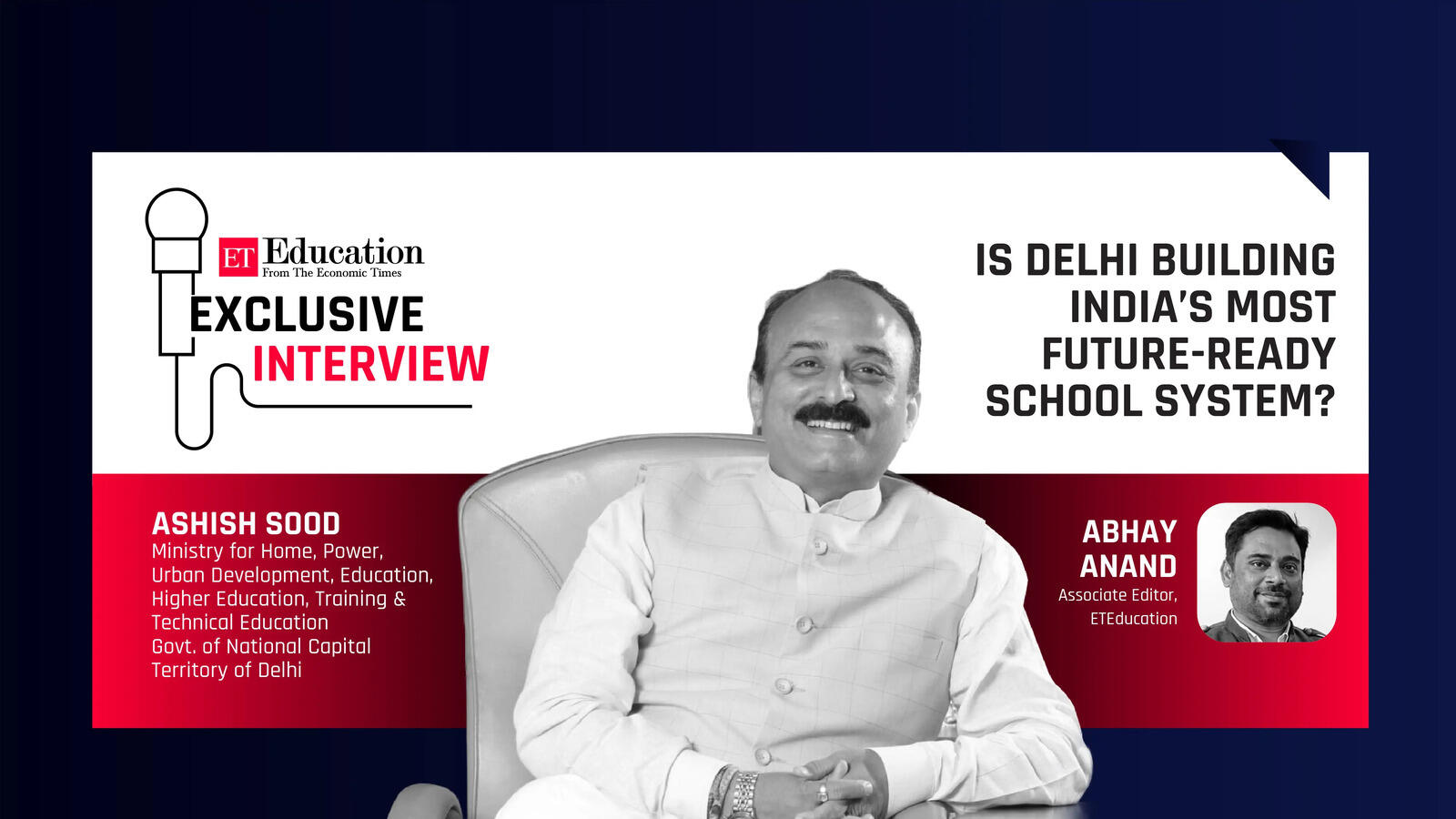
Delhi Education Minister Ashish Sood discusses the government’s roadmap for education reforms in the capital, including private school fee regulation, AI-enabled classrooms, teacher recruitment, higher education funding, employability, and industry-academia collaboration. The conversation also explores the future of the Delhi education model, digital inclusion, and policy changes aimed at building a future-ready education ecosystem.
As Delhi’s education ecosystem enters a new phase of reforms, debates around private school fee regulation, AI-driven classrooms, teacher recruitment, higher education funding, and employability are increasingly shaping policy conversations in the capital. In this exclusive conversation with ETEducation, Ashish Sood, Minister for Home, Power, Urban Development, Education, Higher Education, Training & Technical Education, Government of National Capital Territory of Delhi, shares insights into the government’s vision for building a future-ready education system.
The interview explores the rationale behind the government’s move to regulate private school fees and balance institutional autonomy with accountability. Sood also discusses the decision to phase out the Delhi Board of School Education, the growing focus on smart classrooms and AI-enabled learning, and how the government plans to prepare both teachers and students for the next phase of digital transformation in education.
The discussion further examines concerns around teacher shortages, staffing reforms, and the challenges facing Delhi-funded colleges in areas such as infrastructure and funding support. Sood explains the government’s plans for strengthening higher education institutions while creating stronger linkages between academia, startups, research, innovation, and industry needs.
A key focus of the conversation is employability and future-readiness, with emphasis on skill development, industry exposure, and technology integration across schools and higher education institutions. The interview also touches upon how Delhi plans to ensure digital inclusion so that students from economically weaker backgrounds are not excluded from technology-led learning initiatives.
Through perspectives on governance reforms, education technology, affordability, employability, and long-term institutional development, the conversation offers insights into how the Delhi government aims to position the capital’s education model nationally over the next five years.
Join the community of 2M+ industry professionals.
Subscribe to Newsletter to get latest insights & analysis in your inbox.
All about ETEducation industry right on your smartphone!
- Download the ETEducation App and get the Realtime updates and Save your favourite articles.