
Disclaimer: The following content is generated automatically by a GPT AI and may not be accurate. To verify the details, please watch the video
South Africa is restarting its push to develop a national artificial intelligence policy after an earlier draft was withdrawn amid concerns over credibility and sourcing, in a move that underscores both the urgency and complexity of shaping AI rules in one of Africa’s most industrialized economies.
Communications and Digital Technologies Minister Solly Malatsi has appointed a new advisory panel to guide the development of the country’s National Artificial Intelligence Policy, with Wits University’s Professor Benjamin Rosman tapped to lead the effort. The government is now seeking to craft a framework that supports innovation and economic growth while also addressing governance, safety and protection against potential harms.
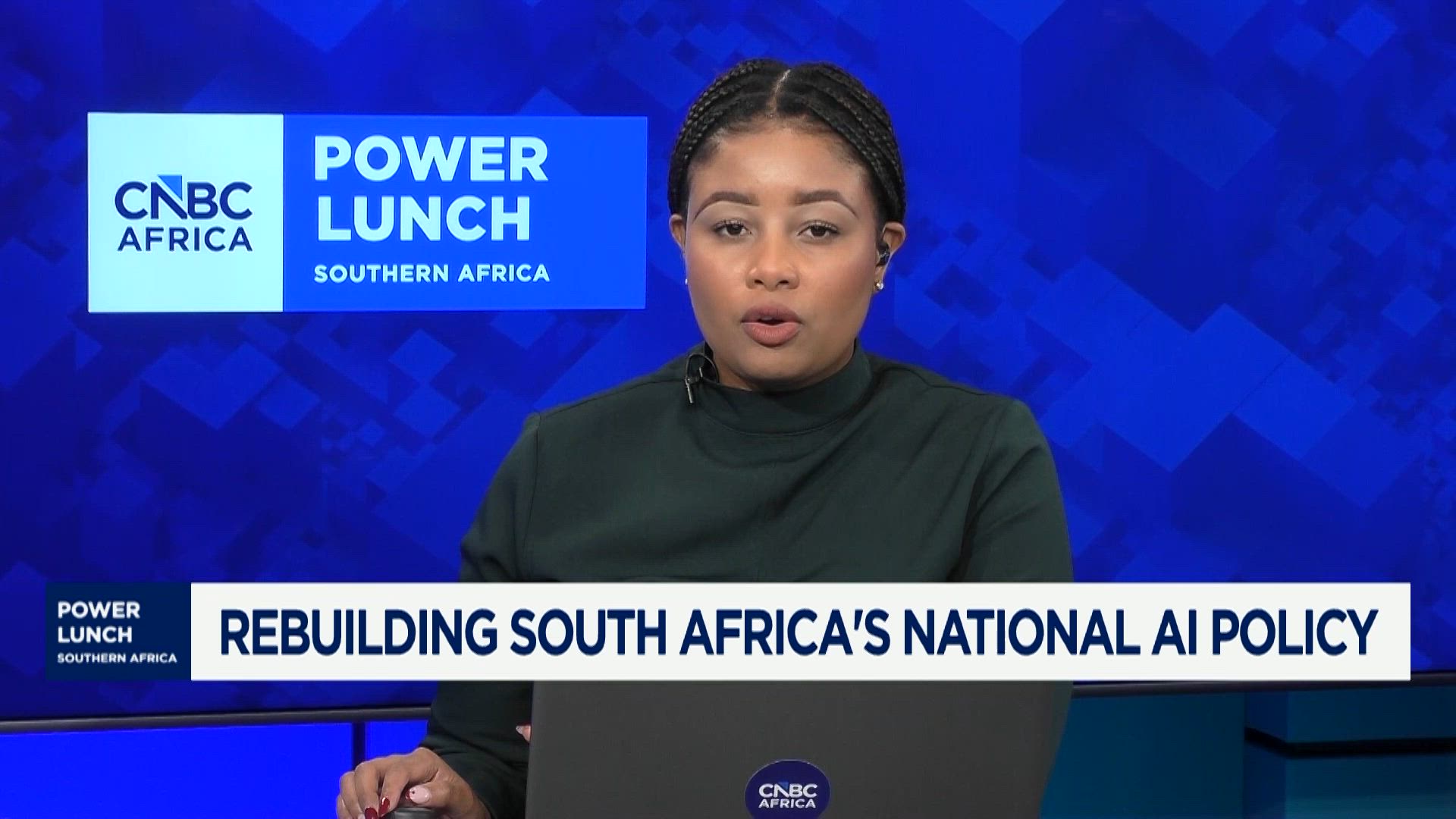
Speaking in a television interview, Rosman said the challenge for South Africa is not only to catch up with fast-moving global developments in AI, but to ensure it is not relegated to being merely a user of systems created elsewhere.
“I really think this is one of the most important things — that we can’t just afford to be using things developed elsewhere,” Rosman said, warning that excessive reliance on foreign AI tools could mean South Africans and local businesses simply pay subscription fees to offshore technology providers, effectively exporting value out of the country.
That argument goes to the center of a wider policy debate now playing out globally: whether countries without the scale of the U.S. or China can still carve out meaningful positions in the AI economy through localized innovation, regulatory clarity and skills development.
Rosman said South Africa already has many of the building blocks needed to participate more actively, including deep pools of talent and pockets of computing capability across the country. But he stressed that the missing ingredient is alignment.
According to Rosman, the country needs a more deliberate and coordinated strategy that brings together infrastructure, institutions and skilled people to create critical mass. He said South Africans have repeatedly shown they are “incredibly smart” and “incredibly resilient,” with the capacity to build innovative solutions, but policymakers now need to think more purposefully about how to channel those strengths into AI development.
The reset comes at a sensitive moment. AI policy around the world remains fragmented, with the U.S., China and the European Union pursuing sharply different models on regulation, competition, data use and safety. Rather than simply adopting one of those approaches wholesale, Rosman suggested South Africa has an opportunity to build a distinctly African framework for AI governance.
He said no single jurisdiction has yet found the definitive model for regulating AI, although useful elements can be drawn from multiple policy systems. In some areas, he argued, the right answer may not yet exist — creating room for South Africa and other countries on the continent to contribute original thinking, especially where local economic and social realities differ from those in major global AI powers.
Rosman pointed in particular to AI safety and economic policy as areas where African perspectives could help shape the conversation, rather than merely follow it. That stance reflects a broader ambition for South Africa to become more than a downstream market for imported digital systems.
Still, any AI strategy in South Africa will inevitably be judged against the country’s domestic challenges, most notably high unemployment and entrenched inequality. One of the major global concerns around AI is that it could automate tasks, displace workers and widen income gaps — risks that may be even more acute in an economy already struggling with joblessness.
Rosman acknowledged the scale of that challenge but framed AI primarily as a tool of empowerment rather than exclusion, provided access is broadened. In his view, AI can dramatically expand what capable people are able to do, especially when they are trained to use the tools effectively. The risk, he said, is not the technology itself so much as unequal adoption.
If AI remains concentrated among those already embedded in the technology sector, he warned, existing divides could deepen. But if government and institutions can put the tools into the hands of more people, AI could help bridge gaps rather than widen them. South Africa’s existing economic pressures, he suggested, may even be an advantage in policymaking because they force decision-makers to confront the social consequences of technological change with greater urgency than in some richer countries.
Another recurring challenge for South Africa is implementation. The country has often set out ambitious digital policy goals, only to struggle with execution. Rosman said the current process appears more encouraging, pointing to Malatsi’s decision to convene a committee with expertise spanning AI, policy and law.
He emphasized that successful policymaking will require the right voices at the table and a framework grounded in first principles rather than one that is purely reactive to headlines or external pressures. In his words, the policy should be as “futureproofed” as possible, allowing it to remain relevant as the technology evolves.
As for where South Africa could build a competitive edge, Rosman stopped short of picking a single sector. AI is already affecting industries from public services and fintech to mining, healthcare and education, he said, and its reach will likely extend across “every single sphere” of social and economic life.
That breadth is precisely what makes the policy exercise so important. South Africa is not simply writing rules for one industry; it is trying to define how a general-purpose technology will be developed, governed and deployed across the economy.
The stakes are high. If done well, the new AI policy could help South Africa foster domestic innovation, retain more value locally and create a governance model better suited to African realities. If done poorly, the country risks falling further behind in a technological shift that is rapidly reshaping business, labor and public policy worldwide.
For now, the appointment of the new panel signals a reset — and a second chance for South Africa to build a credible national AI strategy after a troubled first attempt.