

Adam has a degree in Engineering and has a life-long interest in technology. He has been writing for over a decade for various print and online publications, with a focus on consumer tech. He joined How-To Geek in 2024 while working at Pocket-lint.
As well as being a long-term fan of Apple products, he also has a strong interest in smart home tech, running a Home Assistant server at home to automate all his smart home devices. He believes that the ideal smart home should work with minimal interaction from the user, with automations running as if by magic rather than requiring you to push buttons on a control panel. You can find more of his work on Muck Rack.
AI chatbots such as ChatGPT and Claude are incredibly useful tools that allow you to set up custom projects or dedicated tools to perform specific tasks. Becoming reliant on a single service to access your tools is far from ideal, but there is another option.
The problem with building your life around a chatbot
Your tools become reliant on a single service

AI chatbots are great at general tasks, but you can make them even more powerful by creating dedicated tools to do specific things. In ChatGPT and Claude, you can create projects with their own sets of custom instructions to make them even better at performing specific tasks. You can also add files to the projects to provide context that the tool can access.
For example, I set up a project that includes documents containing lists of my favorite musical artists, TV shows and movies, and favorite video games. Each morning, I run a command in the project, and it searches for news on everything listed in the documents and alerts me if a band I like has a new album out or if there's a game I'd like that's heavily discounted.
While tools like this can work well, there's a major underlying problem: they're completely reliant on the chatbot. If I lose access to the chatbot, I lose access to my tool.
An AI service might raise its prices to the point where it's no longer cost-effective to use or might put features behind paywalls. A rival chatbot might introduce must-have features that convince you to switch, or you might just feel uncomfortable with the direction that a company is taking.
If you decide to switch, your tool is gone, and you have to build it again in your new chatbot of choice. While that may be simple for some tools, for others it may require significant work.

Claude
- Price
- $20
Claude is an AI assistant made by Anthropic. It can assist with a wide range of tasks—writing, coding, analysis, research, and more. Unlike a search engine, Claude reasons through problems conversationally, making it useful as a thinking partner rather than just an information retrieval tool.
AI can often help you build what you need
Ask it to make the tool, not be the tool
There is another option. Instead of setting up your tools within your chatbot, you can use your chatbot to build the tools for you. You can then run these tools independently of your chatbot, so that you're not reliant on any single service for them to work.
The best part is that you don't need to know the first thing about how to build the tool that you want to use. Your AI chatbot can do it for you. As long as your project isn't too complex, you should be able to get your chatbot to help you vibe code something that can do the job.

I used Claude to create a version of my tool that looks for news about my favorite media. It took maybe half an hour to get something up and running on my mini PC that looks for news on my favorite artists and alerts me if there is anything new. It even suggested and built a web interface for updating the list of artists, shows, movies, and games it should look for.
The tool works really well. Just this week, I got an alert that Phoebe Bridgers was due to play her first solo show in about three years, followed up the next day by the news that the gig featured several new songs, suggesting that a new album may finally be on the way. This is exactly the kind of news that I set up the original project to uncover, and the version that Claude built worked without any chatbot involvement at all.
The types of things that are worth building
Some tools may still require the help of AI
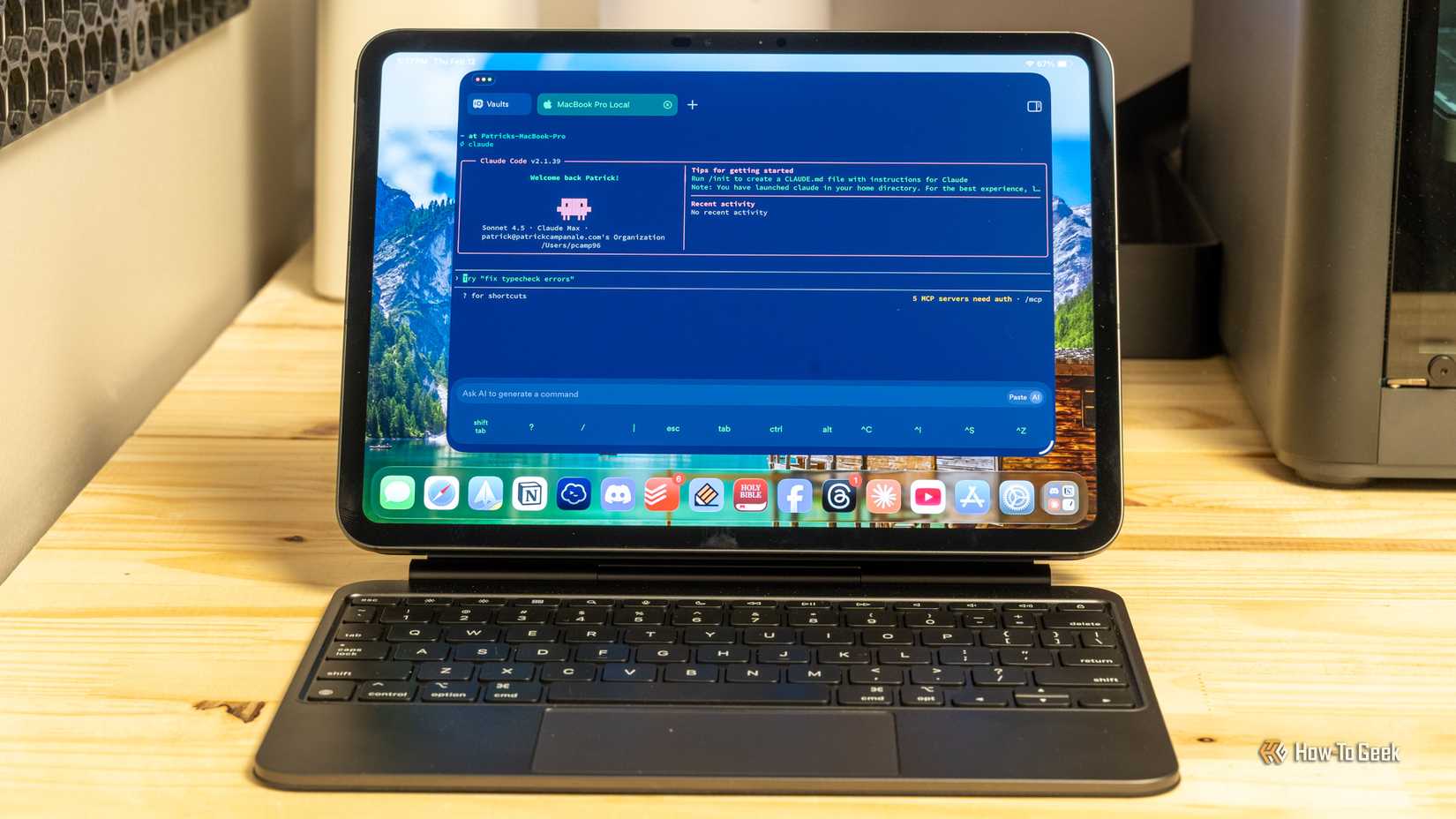
Building your own tools is great for many types of tools. My news aggregation tool, for example, works well because it's essentially pulling data and looking for pattern matches, which code can do just fine. Projects involving math and logic or dealing with fixed data should be possible to recreate.
Some tools also require the use of AI to work well. For example, you might set up a project that writes work emails that match your typical writing style so that you can get your chatbot to write your replies for you without it sounding like a typical chatbot response. You can upload examples of your previous emails to the project and instruct the AI to build responses that match the style of those examples.
This isn't something you can easily build without an AI to generate the text for the emails. However, you could run a local LLM or use a cloud-based chatbot through its API. That way, you can switch to a different LLM whenever you want without breaking your tool.
Some tools may be so complex that creating them yourself isn't really viable. However, the more tools that you can build for yourself, the less reliant you will become on any specific chatbot.
You don't always need to rely on a chatbot
Chatbots make it easy to create useful tools, but building all your daily workflows inside them makes you dependent on them. You may find that you can replicate a lot of your tools outside of your chatbot in less time than you think. You then own the tool forever, even if Skynet becomes self-aware and closes your account.