
A top-down look at the product that understood data and specialised AI before the world was talking about either.
7 min read
Just now
--
Before we look at the product — the lesson it teaches.
Most AI teams reach for a large language model first. Then ask about speed. Then discover the gap between what the model can do and what the experience needs — and start patching.
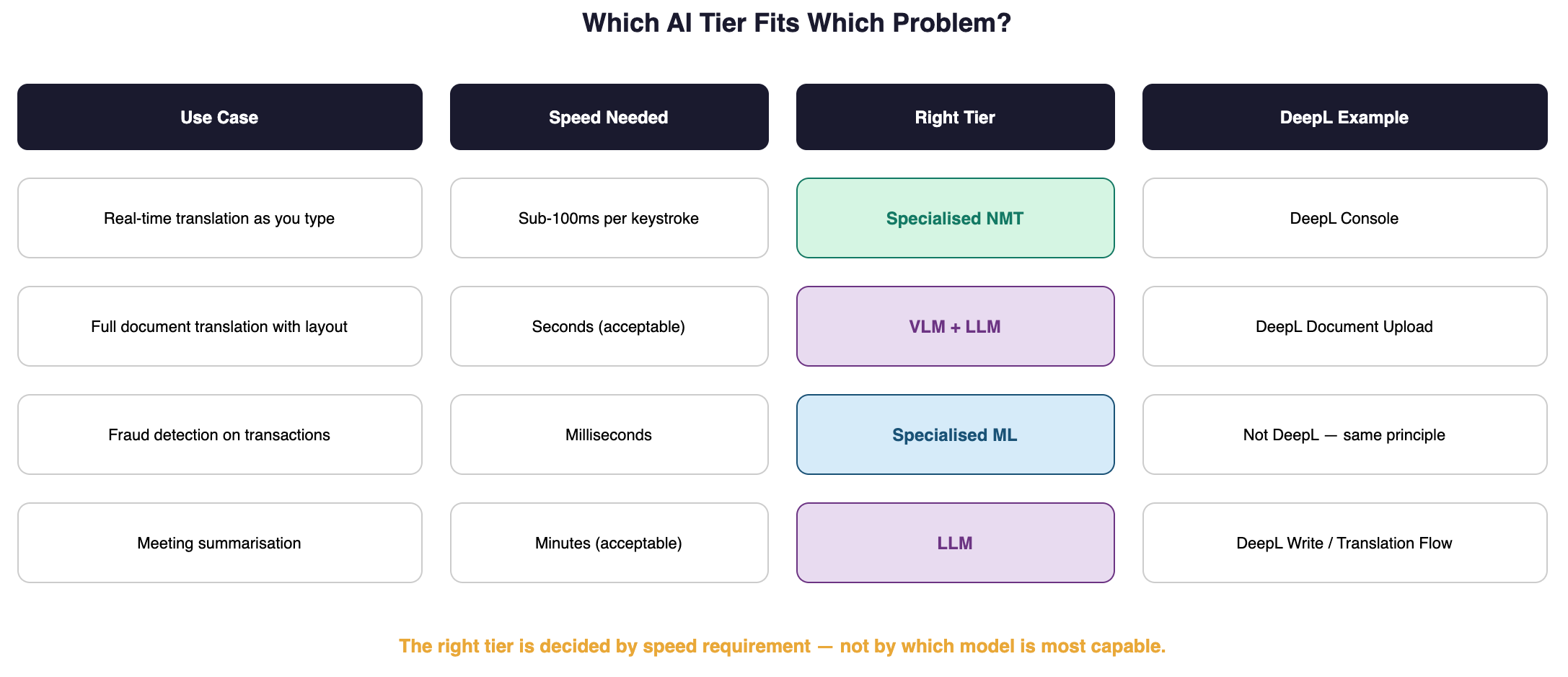
DeepL did the opposite. Data first. Right model for the right speed requirement. LLM only where it earned its place. In that order.
The feel of a product is often decided by one thing: how long the user waits. Get that wrong and no model quality in the world fixes it.
The Experience That Should Not Be Possible
Open DeepL. Start typing in English. Watch the German appear — word by word, adjusting as your sentence takes shape, no button, no wait.
If you have only ever used Claude or ChatGPT for translation, the difference is impossible to ignore. It does not feel like a tool. It feels like the app is thinking alongside you. Google Translate comes close to it but it beats by miles when it comes to quality.
A large language model cannot do this. LLMs build output step by step — they need the full sentence before they can start generating a reliable translation. That is not a speed problem. It is a design problem. No amount…