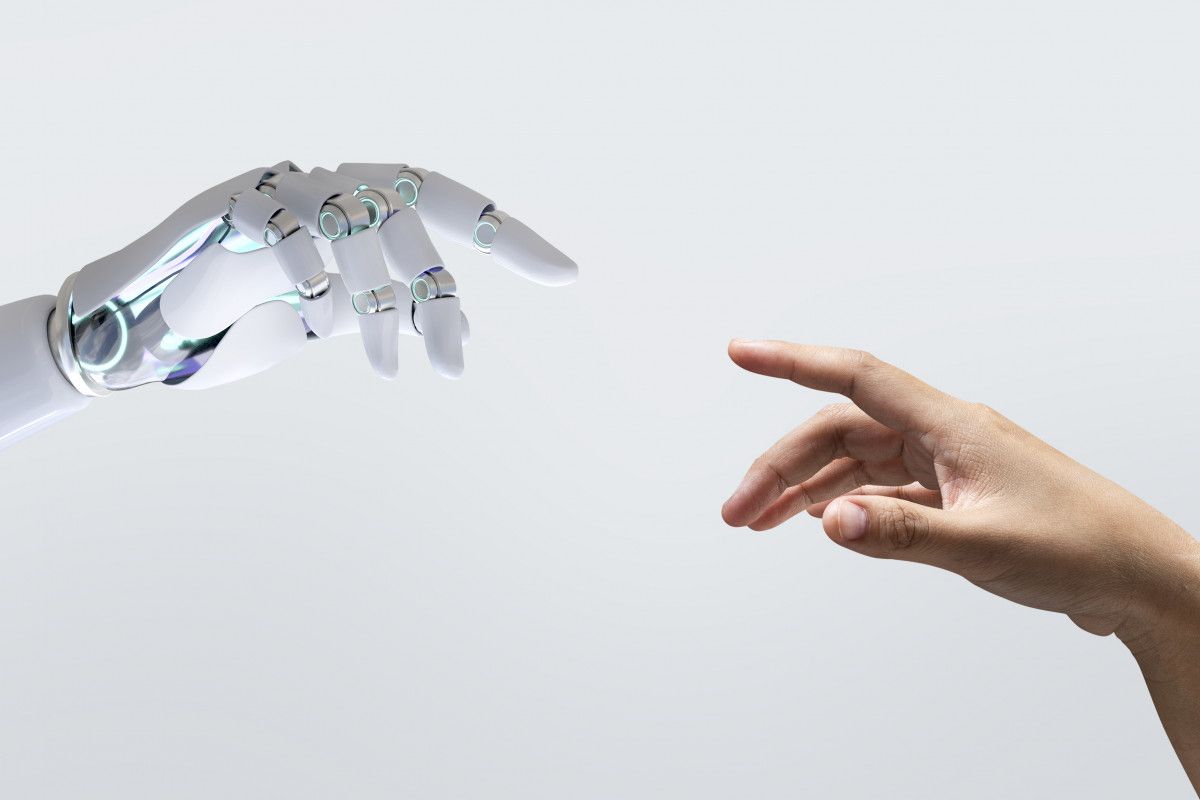
Artificial intelligence is coming to medicine. But will it help?
AI is not just about computers and robots. Increasingly, it will shape what happens when you visit your doctor

This week I’m writing from Berlin, where I’m leading Canadian university leaders on a week-long study of Germany’s higher education and research ecosystem. Our North American penchant for policy by experimentation was in sharp contrast with the coordinated national strategies and infrastructure evident across the German economy. By my observation, the role of artificial intelligence (AI) in health is becoming the next national mission.
Friedrich Merz, the German chancellor, is leading the charge to unleash AI. “I will push to ease the regulatory burden in the EU on AI,” he said recently, “and, where possible, to exempt industrial AI from the current regulatory straitjacket that is too tight.”
Recommended Videos
Now, before readers stop and say, “This has nothing to do with me,” think again. AI is not just about computers and robots. Increasingly, it will shape what happens when you visit your doctor, undergo a test, receive a diagnosis, or fill a prescription. And whether this becomes a blessing or another modern headache depends on our leaders setting the right course.
Americans are charging ahead at full speed with AI. In the United States, giant technology companies see healthcare as the next great gold rush. Faster diagnostics. Faster data collection. Faster treatment decisions.
Germany has a different attitude, and people are asking questions. Who controls the data? Can patients trust computer-generated advice? Will medicine become colder and more mechanical? Will doctors eventually rely too heavily on algorithms? These are genuine concerns.
Medicine is not a math problem. Patients are frightened, confused, emotional, and vulnerable. They need accurate information, but they also need judgment, experience, communication, and compassion.
A machine cannot look a worried patient in the eye and say, “You’re going to be alright.” At least not convincingly. But make no mistake. AI is coming to healthcare everywhere.
Soon, if not already, AI will read mammograms, identify skin cancers, flag dangerous drug interactions, predict heart disease risk, and analyze blood tests. In many cases, it will catch abnormalities earlier than physicians can. That’s the good news.
The bad news is that many people are completely unprepared for this transition. Some readers still avoid online banking. Others rarely use email or electronic records. Many older people understandably distrust technology altogether. But avoiding technology is risky in itself.
Patients now need “AI literacy in healthcare” to understand enough about how AI works in medicine to ask sensible questions and avoid being fooled.
That matters because AI can be brilliant one moment and dangerously wrong the next. A computer program may confidently provide false information. Anyone who has experimented with AI systems knows this.
So what should readers do? First, become more engaged in your own healthcare, not less. Too many people drift through the medical system. They take pills they don’t understand and undergo tests they never discuss.
Second, become comfortable with digital tools. Learn how to access your medical records electronically. Learn how to verify information from reliable medical sources. Ask family members for help if necessary. Pride is a foolish reason to remain uninformed.
Third, know that technology should align with common sense – not replace it.
One of the smartest observations I heard in Germany came from a researcher who warned that societies risk becoming “overconfident in technological answers to human problems.”
AI may improve medicine. It may reduce errors, shorten wait times, and help physicians make better decisions.
But no algorithm replaces healthy living. No computer can exercise for you, stop you from smoking, overeating, drinking excessively, or refusing to manage stress. And no AI system will magically repair a piecemeal healthcare system damaged by leadership indecision or policy blunders.
This column offers opinions on health and wellness, not personal medical advice. Visit www.docgiff.com to learn more. For comments, diana@docgiff.com. Follow on Instagram @diana_gifford_jones
Join the Conversation
This website uses cookies to personalize your content (including ads), and allows us to analyze our traffic. Read more about cookies here. By continuing to use our site, you agree to our Terms of Use and Privacy Policy.