
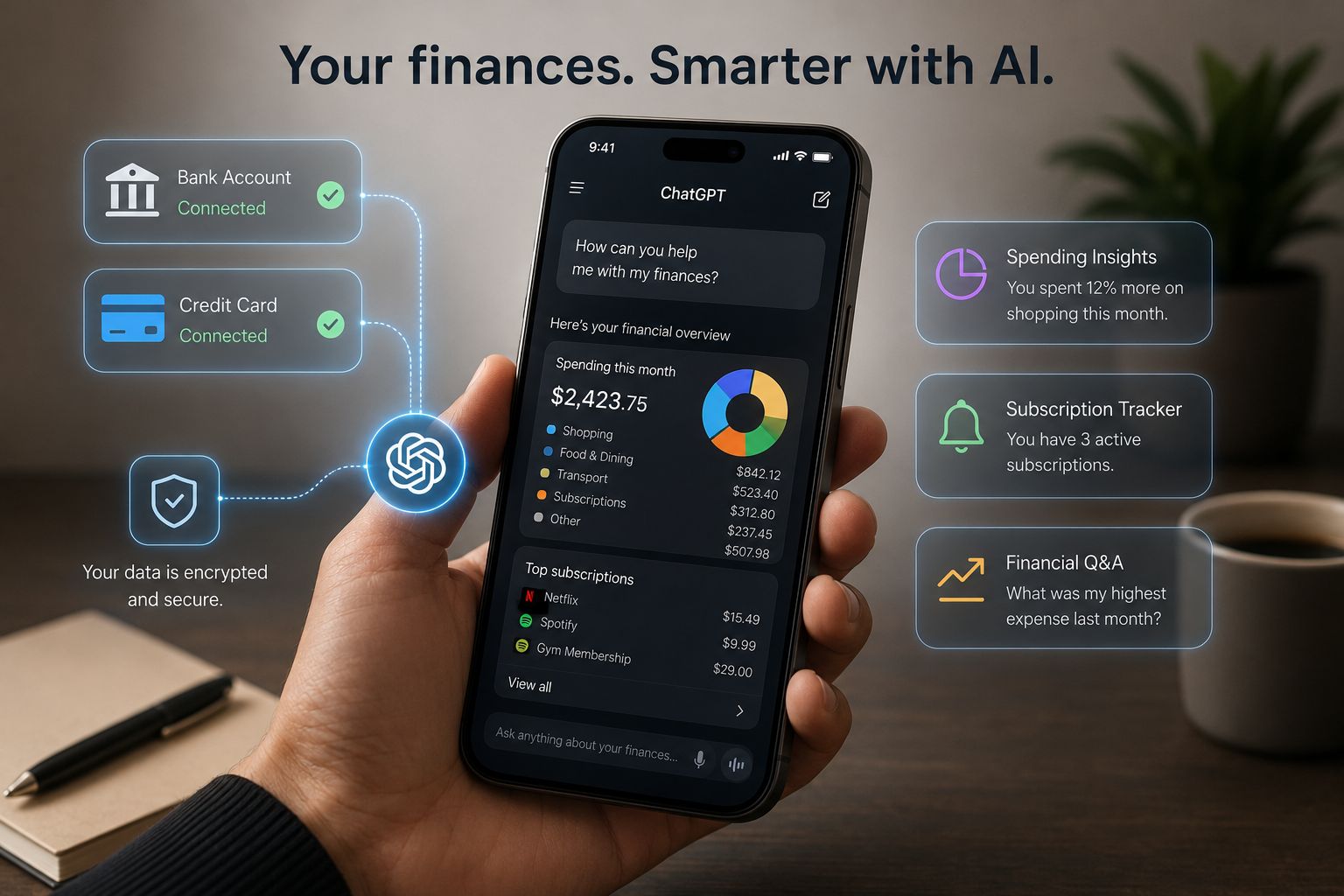
It seems that OpenAI has decided that ChatGPT is no longer just about helping you write emails or summarize articles, but now wants to know exactly where your money goes! In a bold move aimed at turning the smart robot into a personal financial dashboard, the company has launched a new feature that allows users of the ChatGPT app on iOS to link their bank accounts and credit cards directly to the artificial intelligence, so that it can analyze spending habits, track subscriptions, and answer complex financial questions based on your real transaction data.
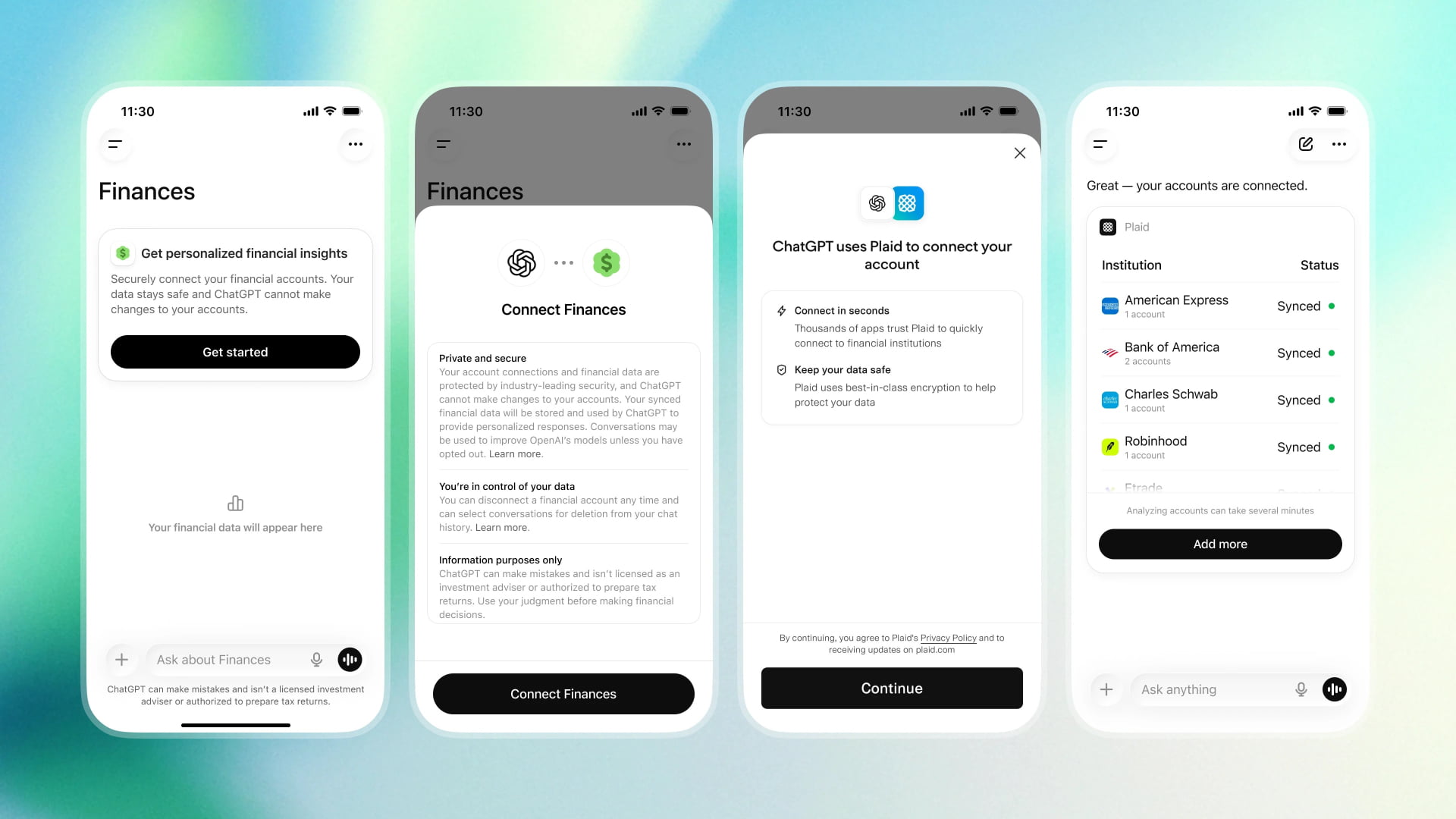
A smart financial dashboard at your fingertips
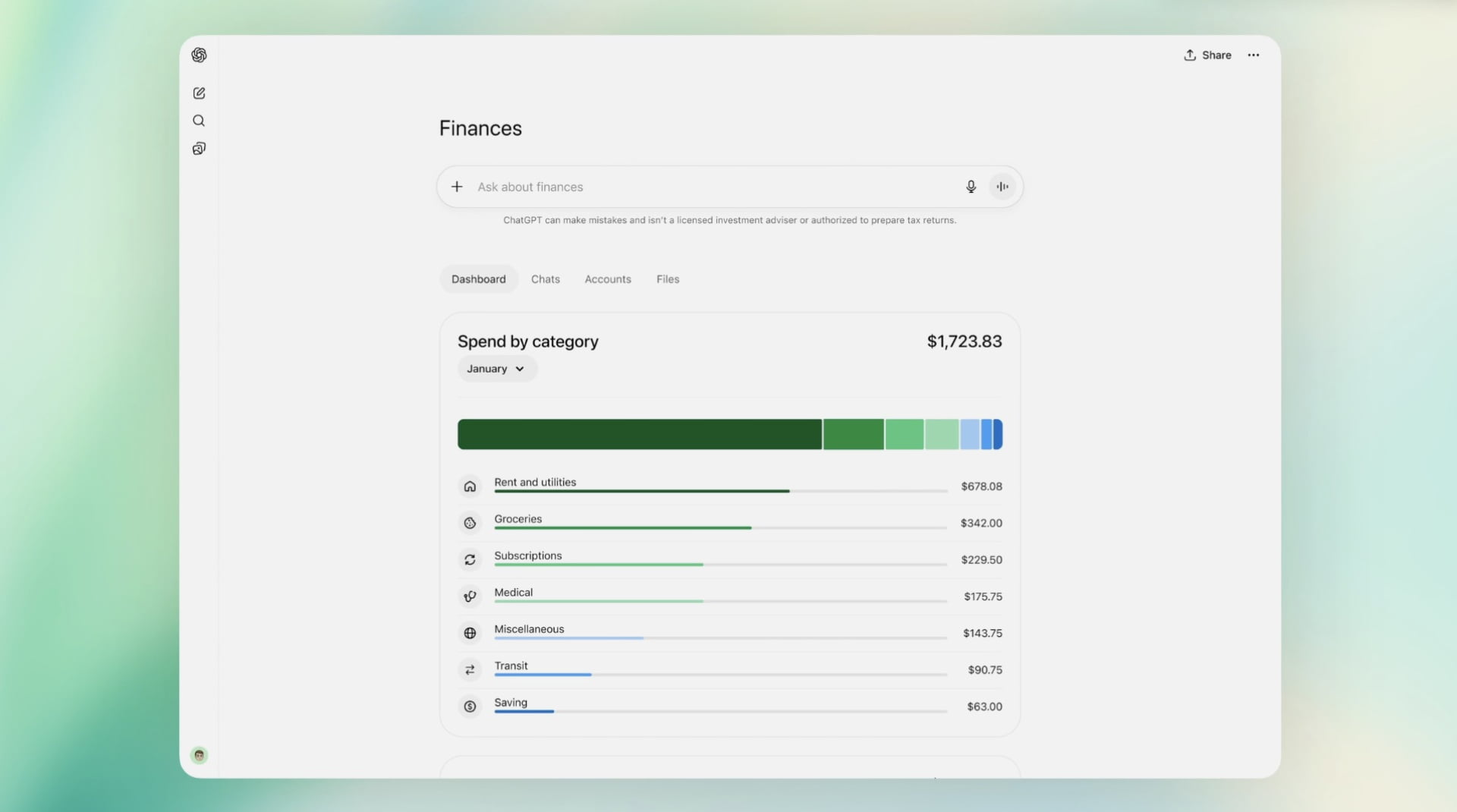
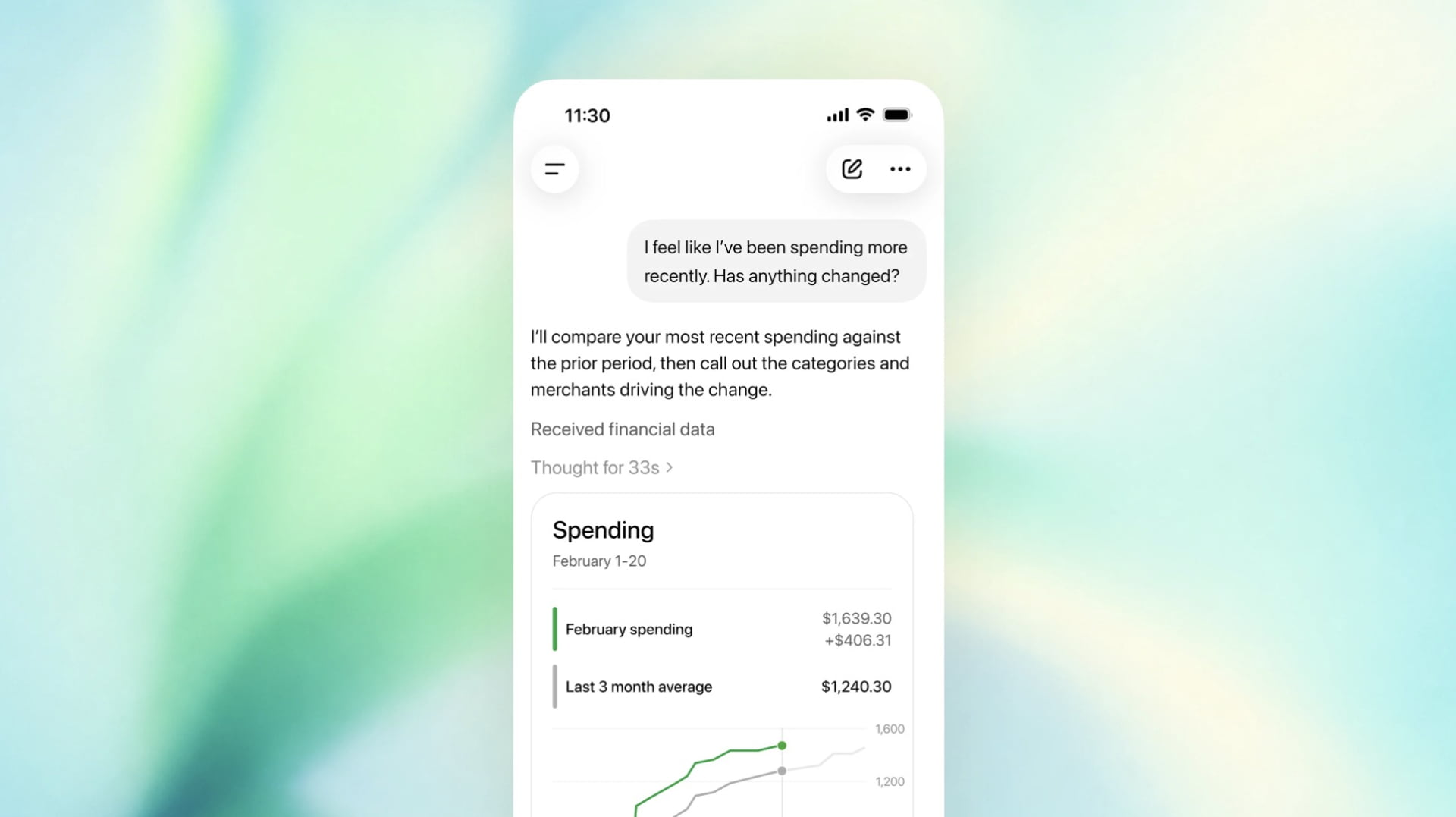
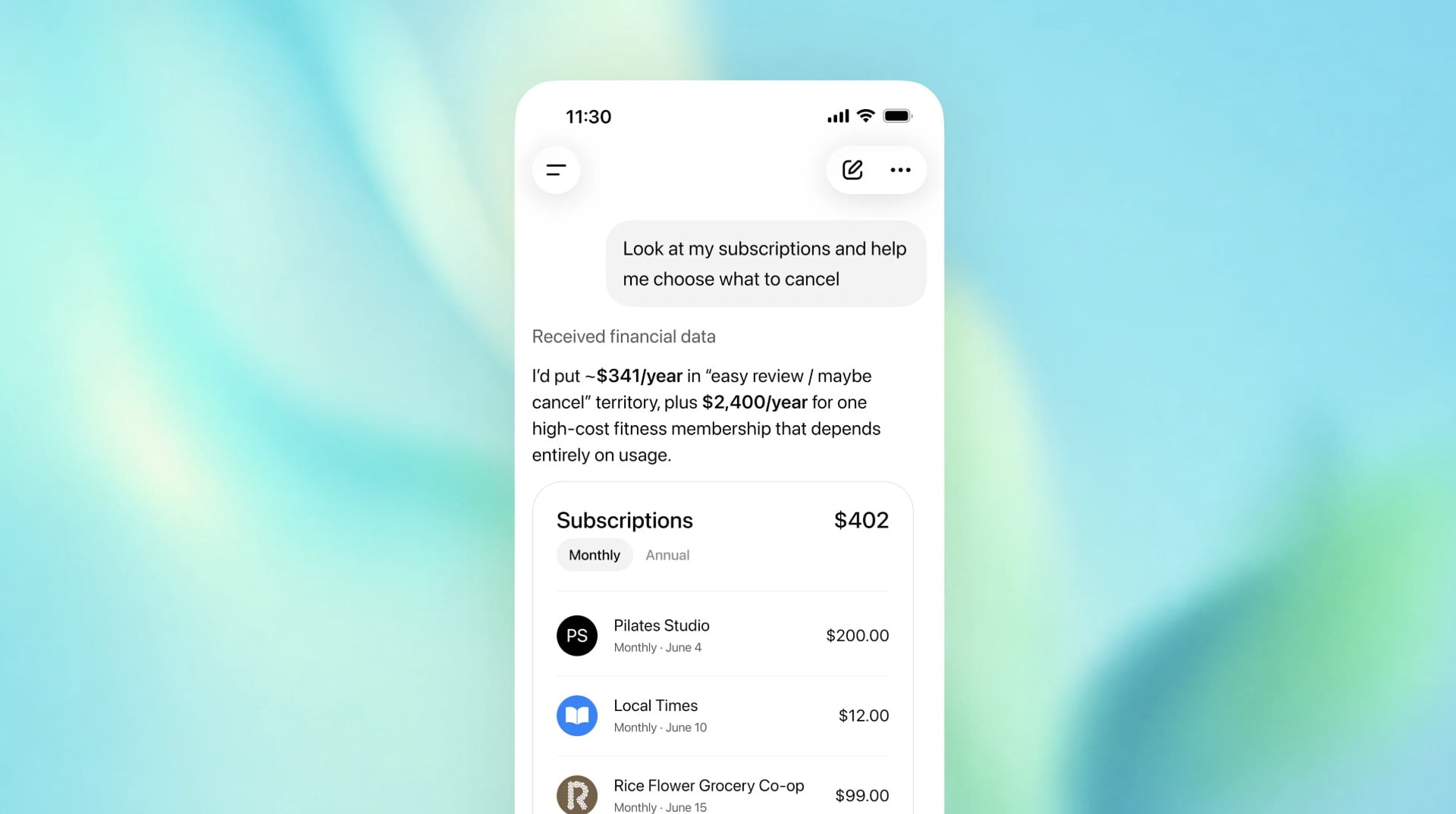
This feature is currently available as an early beta for ChatGPT Pro subscribers in the US and leverages the popular Plaid service to securely synchronize balances and transactions from over 12,000 financial institutions. Instead of relying on generic budgeting tips you might find on any website, ChatGPT will create an up-to-date dashboard displaying your investment portfolio's performance, spending details, active subscriptions, and even upcoming payments.
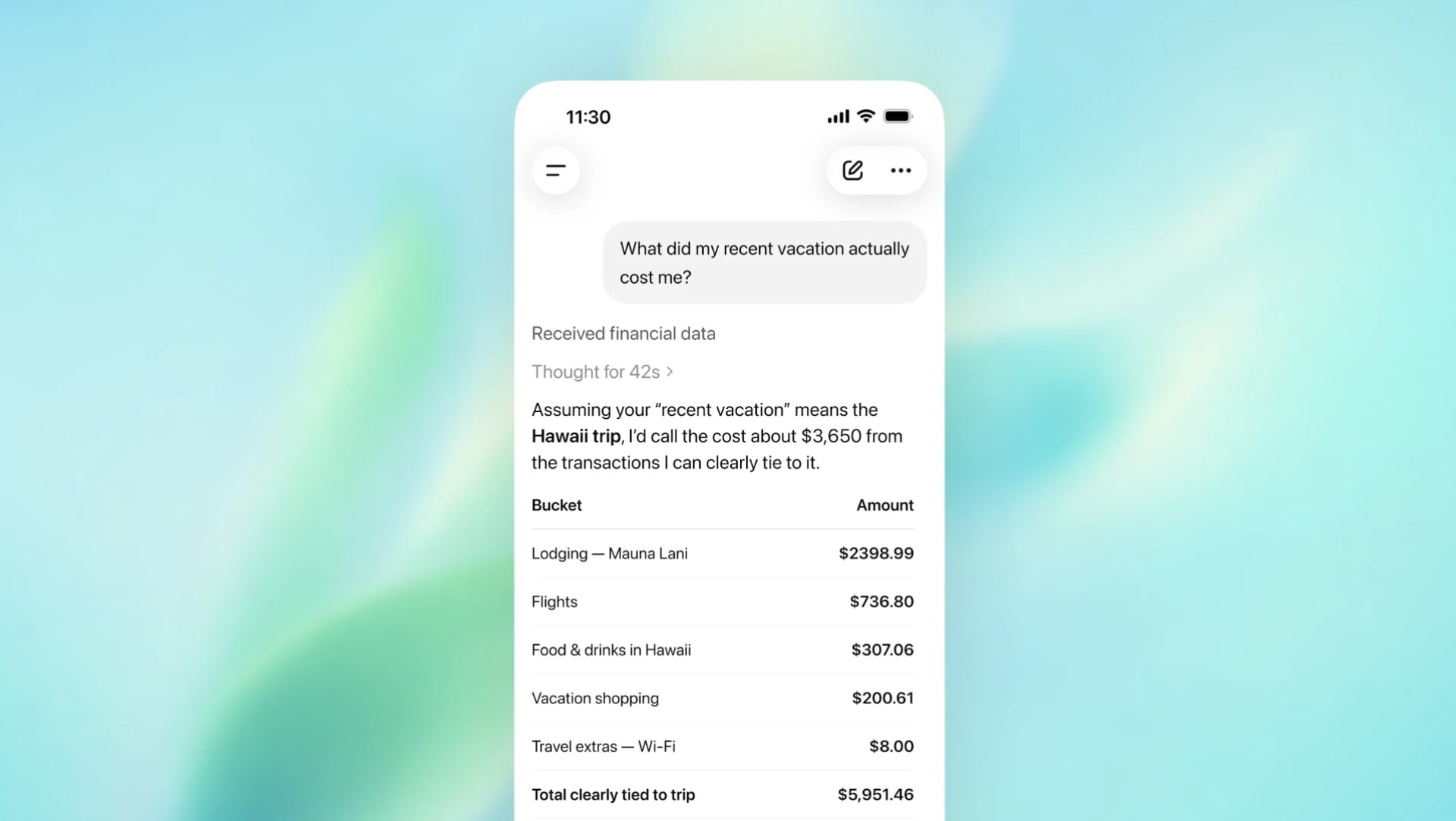
The goal here is to simplify financial management; instead of navigating between different banking applications, you can simply ask: “How much have I spent on coffee this month?” or “What subscriptions have I not used recently?” The robot will immediately analyze the data and provide the answer. OpenAI also announced that support for Intuit accounts will be added soon to enhance this experience.
The intelligence behind the numbers: The GPT-5.5 model and “financial memories”
To handle the complex logic behind financial requests, the application relies by default on the GPT-5.5 Thinking model, OpenAI's latest advancement in advanced reasoning and inference tasks. This model not only reads numbers but also understands context; users can provide the application with additional information about their lives, such as savings goals, mortgage details, or outstanding debts.
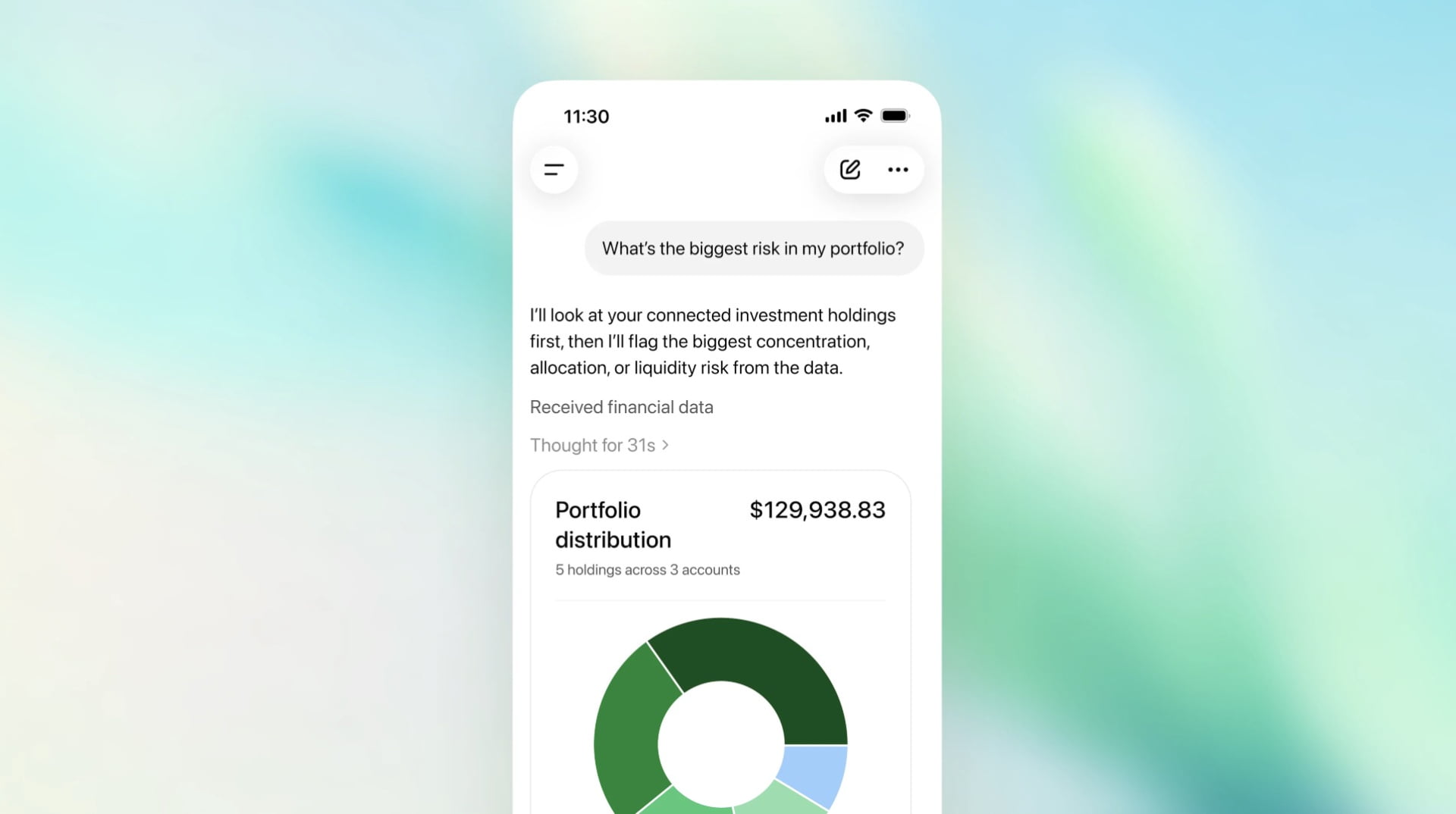
What's particularly interesting is the "Financial Memories" feature, where ChatGPT stores these details for future reference, allowing it to see the user's complete financial picture in subsequent conversations. The company has stated that over 200 million people already use ChatGPT monthly for budgeting and investment purposes, so this move is a natural progression in response to user demand.
Privacy and security: Is your money safe?
Naturally, linking bank accounts to artificial intelligence raises significant privacy concerns. OpenAI has confirmed that ChatGPT can access balances, transactions, and investments to answer questions and generate graphs, but it cannot see full account numbers or make any changes or transfers to your accounts. It remains read-only.
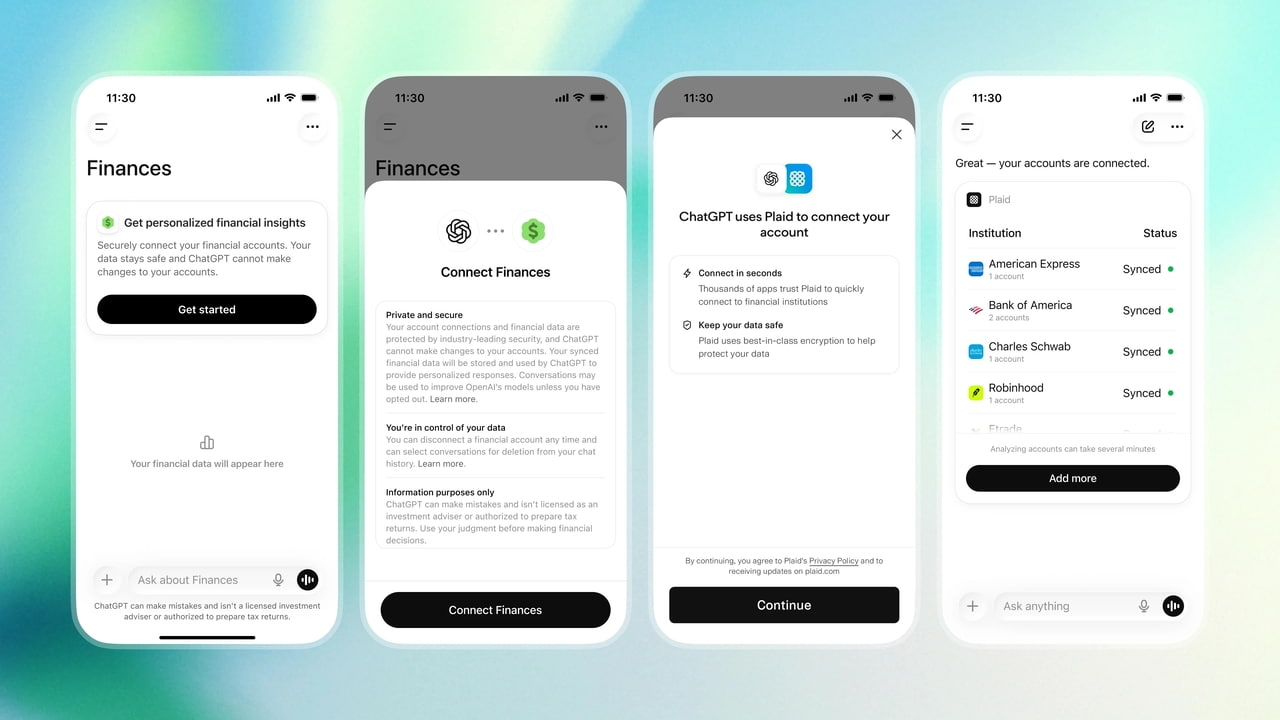
The company also gives users the option to exclude these conversations from the model training process, and these "temporary conversations" will never have access to associated financial data. If you decide to disconnect your account, the company assures users that all synchronized information will be deleted from its systems within 30 days—a guarantee intended to reassure concerned users.
The future: From mere answers to real actions
OpenAI's ambitions don't stop at simply answering questions. Through its collaboration with Intuit, ChatGPT will evolve to be able to estimate taxes, connect customers with local tax experts, check credit card approvals, and even help complete orders directly within the chat window. It's steadily progressing towards becoming a "smart client" that handles tedious tasks for you.

Despite these impressive capabilities, the company emphasizes that ChatGPT is not a substitute for professional financial advice from human beings. The feature will be expanded to Plus subscribers after gathering feedback from the initial phase. If you're a tech and finance enthusiast, your iPhone is about to become much smarter at managing your wallet.
Are you ready to share your bank account details with ChatGPT to organize your expenses?
Source: