
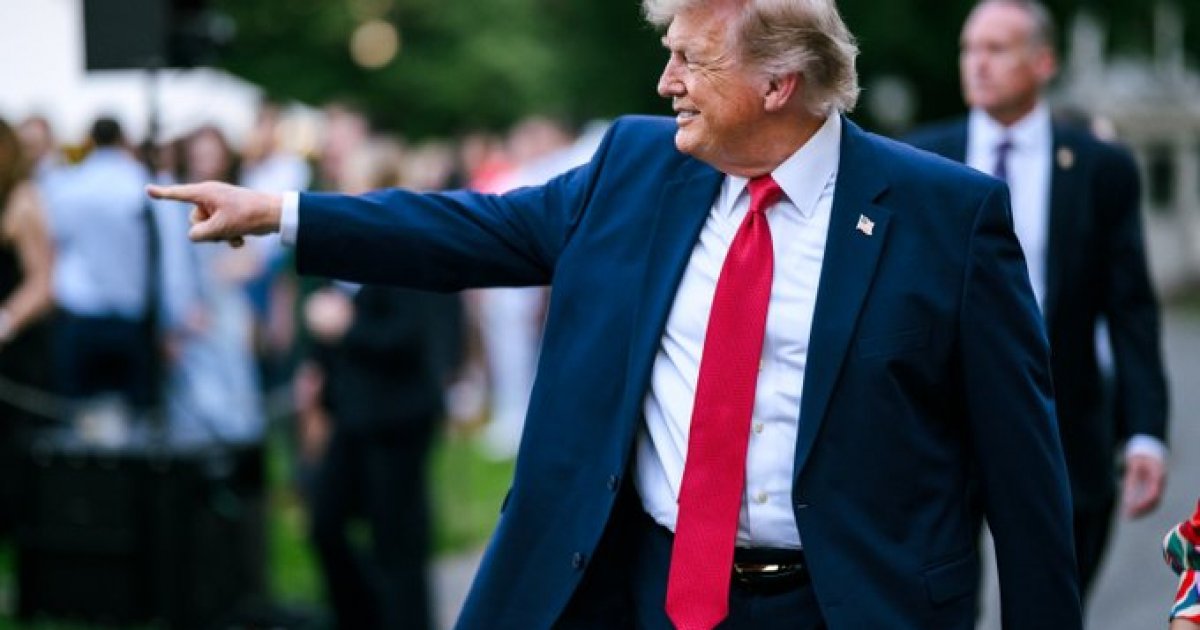
President Donald Trump postponed the signing of a closely watched executive order on artificial intelligence, saying he had concerns that parts of the proposal could undermine the US' advantage in the global AI race, particularly against China.
The executive order had been expected to be signed at a White House ceremony later in the day, attended by top executives from leading AI companies. However, Trump told reporters in the Oval Office that the event was delayed after he raised objections to certain provisions in the draft.
The president said the administration was reconsidering aspects of the order to ensure they do not hinder the rapid development of artificial intelligence in the country.
Trump said the US is leading "China and the rest of the world" in AI and stressed that "I don't want to do anything that's going to get in the way of that lead".
He added that AI is "causing tremendous good," while expressing concern that the proposed executive order "could have been a blocker."
Proposed Framework Under Scrutiny
However, Trump did not specify which sections of the order he opposed. As reports suggested that the administration's plans were paused following pressure from key technology figures, including xAI founder Elon Musk, Meta CEO Mark Zuckerberg and former Trump AI adviser David Sacks.
It was also reported that xAI, Meta and Sacks' venture capital firm, Craft Ventures, did not immediately comment on the matter.
The proposed order was expected to establish a voluntary framework allowing AI developers to engage with the federal government before releasing advanced models to the public, Reuters reported, citing sources familiar with the proposal.
The New York Times separately reported that the order would also enable the US government to pre-evaluate AI systems to detect security vulnerabilities.
Balancing Innovation with Oversight
The Trump administration has broadly embraced the rapid expansion of artificial intelligence, supporting industry-backed measures such as limiting state-level AI regulations.
Massive investments by technology companies have helped fuel the sector's growth, boosting stock markets despite wider geopolitical uncertainty.
At the same time, concerns about cybersecurity risks linked to increasingly powerful AI systems have prompted calls for safeguards.
Earlier this month, the federal Center for AI Standards and Innovation announced agreements with Google DeepMind, Microsoft and Elon Musk's xAI to evaluate AI models before their public release.
Some Trump allies have also advocated for guardrails to address potential risks posed by advanced AI technologies.