
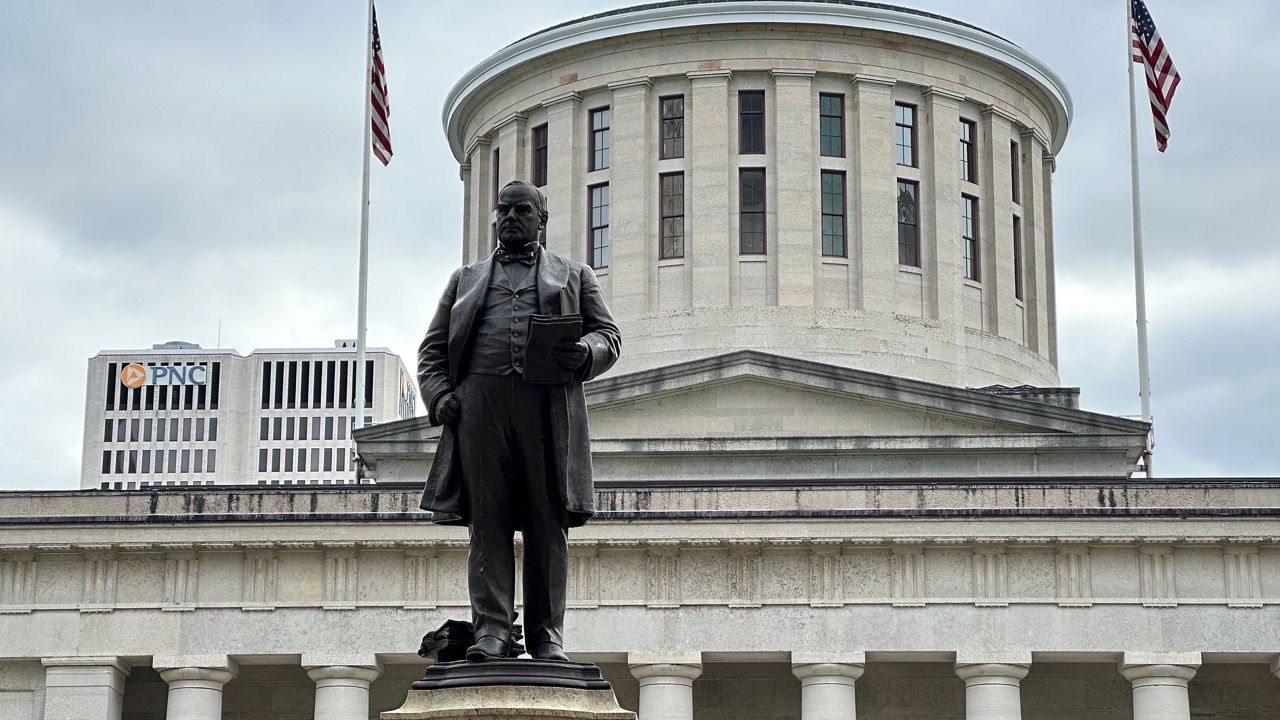
COLUMBUS, Ohio — Whatever your thoughts on the technology, artificial intelligence is here, and it’s making its way into various industries and aspects of our lives.
The Ohio Senate has passed a bill looking to regulate AI in various ways, including requiring watermarks on AI-generated products, barring simulated child pornography and prohibiting identity fraud “using a replica of a person.”
What You Need To Know
- The Ohio Senate has passed a bill that would regulate AI in various ways
- It would require watermarks on AI-generated products, bar simulated child pornography and prohibit identity fraud “using a replica of a person”
- Now that the bill has passed the Senate, it has to move through the House before being sent to the governor to be signed into law

The bipartisan Senate Bill 163 was primarily sponsored by Sen. Louis Blessing, III, R-District 8, and Sen. Terry Johnson, R-District 14. It featured co-sponsors Sen. William DeMora, D-District 25, and Sen. Catherine Ingram, D-District 9.
The proposed language would require AI systems to be programmed to include “a distinctive watermark” on AI-generated content. It also states that no person is to remove a watermark from this content.
The bill would also prohibit artificially generated depictions of minors in obscene content, which includes creation, reproduction, dissemination and purchase.
“Whoever violates this section is guilty of pandering obscenity involving a minor, an artificially generated depiction of a minor, or an impaired person,” the proposed language reads. “If the offense involves a minor or an artificially generated depiction of a minor, a violation of division (A)(1), (2), (3), (4), or (6) of this section is a felony of the second degree.”
The bill would also add language to prohibit identity fraud using a replica, sometimes known as deepfakes, of an individual.
“No person shall create or use a replica of a person's persona in a manner that would induce any other person to make a financial decision or extend credit to any person in reliance on the replica without the express consent of the individual whose persona is replicated,” the proposed language reads.
It goes on to stress that these replicas also cannot be used to damage a person or entity’s reputation or show them “in a state of nudity, engaging in sexual activity, or in any obscene material without the consent of the individual whose persona is replicated.”
The bill passed in the Senate on Wednesday and now needs to make its way through the Ohio House before being sent to the governor to be signed into law.
This comes as President Donald Trump recently called off a signing ceremony for a new order on artificial intelligence because he worried it could dull America's edge on AI technology.
The push for some kind of government action to vet the most powerful AI systems follows growing concern within the banking industry and other institutions about the leaps in AI's abilities to find cybersecurity vulnerabilities in the world's software.