
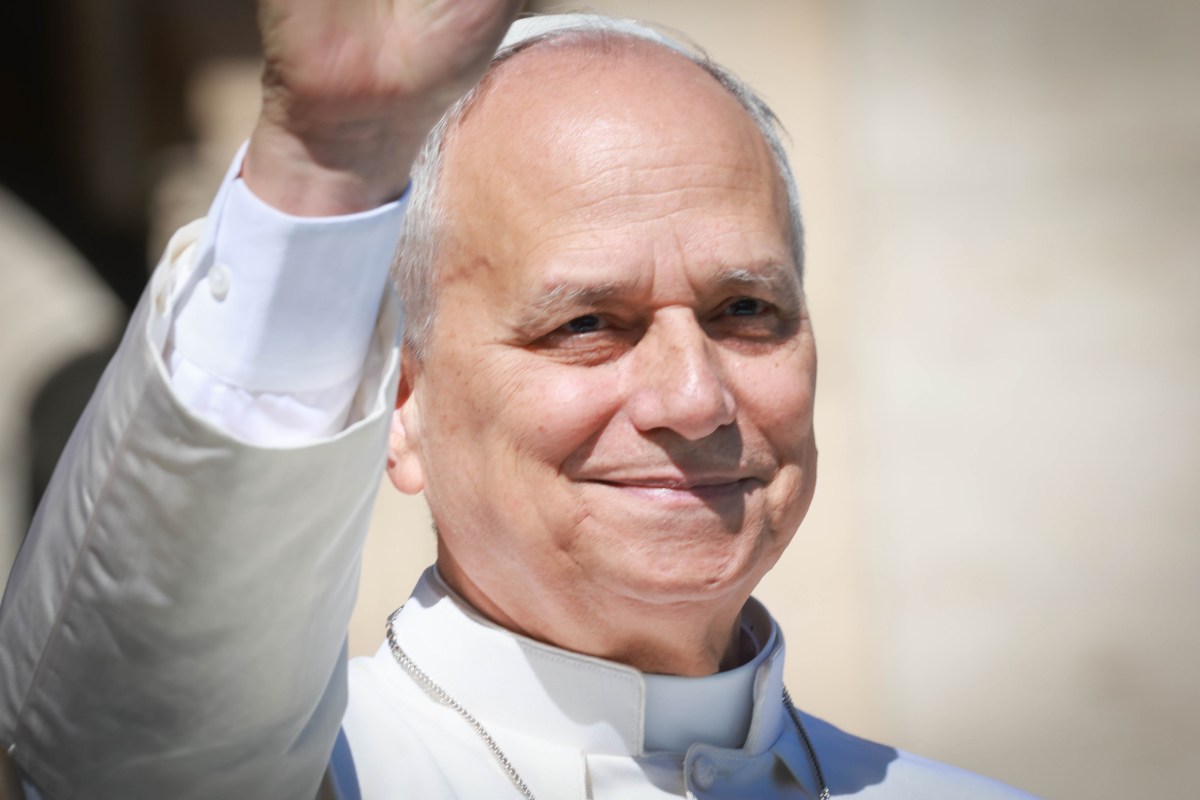
Pope Leo XIV, joined by Anthropic co-founder Christopher Olah, is scheduled to release a papal encyclical on artificial intelligence (AI) on Monday, wading into a major debate about how governments should regulate the rapidly advancing technology with implications for nearly all aspects of society and daily life.
The pope's encyclical on AI comes at a moment when governments worldwide are scrambling to write rules for it. While the Vatican has no formal role in policymaking, past papal teachings have shaped global debates on climate, migration and human rights. The pontiff's moral framing could influence how lawmakers view AI.
But any calls for more stringent regulation will likely be met with resistance from the influential technology industry that has pushed for more lax laws on AI. This could become the first major test for Pope Leo’s soft power and influence just over one year after his selection.
In the United States, President Donald Trump’s administration has embraced AI and pursued policies aimed at promoting U.S. business interests, seeking to limit states’ abilities to implement independent AI regulation.
What Is Pope Leo XIV’s First Encyclical?
Pope Leo’s first encyclical letter titled Magnifica humanitas is set to be published on Monday, May 25, and is expected to focus on the safeguarding of humans in the era of AI growth, according to the Vatican.
The pope is “signaling to the world the enormity of this moment in human history,” Robert Orsi, professor of history at Northwestern University, told Newsweek on Friday.
“He is signaling to the world, governments, NGOs and human beings on the planet—he’s signaling just the way Pope Francis wanted to signal the enormity of the climate crisis—by making this his first encyclical is signaling the enormity of this moment,” he said. “The arrival of AI demands careful reflection on the parts of human beings on the planet, and that is what he is going to tell people.”
Orsi drew a parallel between Pope Leo XIII, whom Pope Leo XIV named himself after, who issued his first encyclical Rerum novarum about the dignity of the working class in the face of the industrial revolution.
Pope Leo is likely to discuss “the irreplaceability of the human,” he added.
Paolo Carozza, a law professor at the University of Notre Dame, told Newsweek that Pope Leo will be filling a “vacuum” of moral leadership on AI. While many people agree that this is a period of social transformation, he may offer a more coherent moral way of reflecting on that, he added.
...
Pope Leo’s Focus on AI
Pope Leo has made AI a focus of his pontificate, issuing a warning about the technology in remarks on Friday.
“As sadly evidenced by the unbridled promotion and implementation of technology at the expense of human dignity and the damage caused when chatbots and other technologies exploit our need for human relationships, we are truly experiencing an eclipse of the sense of what it means to be human,” he said.
He added it is “imperative to recover an understanding of the true meaning and grandeur of humanity as intended by God.”
The pope has frequently discussed AI and its impact on humanity over the past year. In May 2025, he said he believes AI has “immense potential” for the good of humanity but warned it could also pose "new challenges for the defense of human dignity, justice and labor.”
How to best regulate AI is a central question governments across the globe are facing.
Supporters of AI argue regulation could stifle innovation and growth that could benefit humanity in terms of scientific and medical advancements. But many others have pushed for more strict regulations, arguing AI poses significant threats to human health, the environment and could result in millions of people losing jobs to automation.
What Is the Purpose of an Encyclical?
An encyclical is a formal letter written by the pope with instructions for Catholic followers. They are meant to draw attention to a doctrinal issue and provide guidance of how to discuss the situation or issue, according to the Diocese of Orlando. They are meant to guide bishops and Catholic leaders.
Encyclicals have covered topics ranging from climate change, nuclear peace and rights of workers in the past.
Can Pope Leo Influence AI Regulation?
The pope does not have governing authority, so nothing he says will be truly binding. But he does practice soft power, wielding significant influence over the world’s 1.4 billion Catholics.
Hamid Ekbia, director of the Autonomous Systems Policy Institute at Syracuse University, told Newsweek the encyclical “is coming at a critical juncture for AI regulation,” adding that it “has the potential of tilting the balance in favor of a stronger regulatory environment.”
“While the change might not be immediately discernible, its indirect impact is undeniable. It is not only a much-needed moral intervention, but also a timely political intervention in the U.S. and beyond, especially in Europe and Latin America,” he said.
His encyclical could “give pause to countries contemplating AI or industries rushing to use AI,” Orsi said. The pope’s influence is more so “moral” and will shape how Catholics view AI, but it’s less clear that he will have a direct impact on governments, he said.
“Its influence will be in terms of moral guidance and to call attention to some of the dangers that humans are facing from AI, particularly the potential loss of human dignity,” he added.
Daniel Rober, associate professor and chair of Catholic studies at Sacred Heart University, told Newsweek there are numerous factors that influence government regulation and that the pope is trying to “inject moral consideration” into the conversation.
“What this may influence is the ethos of the questions,” he said. “What Leo wants to inject is the centrality of the human.”
His perspective could be especially influential in parts of the European Union, where papacy does “makes a difference” in how people think about these questions, Rober added.
Rober also noted that Pope Leo convening with Anthropic signals that he is not taking a “reactionary, pessimistic” attitude toward AI but wants to be in the room where decisions are made.
Typically, the Catholic Church does not go “into the weeds” on specific policy proposals, according to Carozza.
“[Pope] Francis did a little bit of that on the environment, but that was pretty exceptional,” he said. “Usually, the way that the church deals with its social teachings is to propose very broad moral, ethical principles for people that they think would serve the common good for all people.”
His guidance could persuade people in spheres working on AI to take the matter of regulation seriously, Carozza added.
Why Trump Paused Executive Order on AI
Trump on Thursday called off plans to sign a new executive order on AI over concerns about its impact on the U.S.’s edge on AI technology.
“We’re leading China, we’re leading everybody, and I don’t want to do anything that’s going to get in the way of that lead,” Trump told reporters.
The order would have established a framework for the federal government to vet the national security risks of AI systems before their release, the Associated Press reported, citing a person familiar with deliberations. It was characterized as a voluntary collaboration with U.S.-based tech companies like OpenAI, Anthropic and Google.
Its cancelation “reveals deep tensions within the administration over AI policy,” Ekbia said.
“On the one hand, we have people such as David Sacks who keeps pushing an anti-regulation agenda on behalf of venture capitalists. On the other hand, we have people like Treasury Secretary Scott Bessent who seems concerned about the vulnerability of smaller and less-resourced players such as small banks, hospitals, and retail chains to AI-enabled attacks,” he added.
This article includes reporting by the Associated Press.