
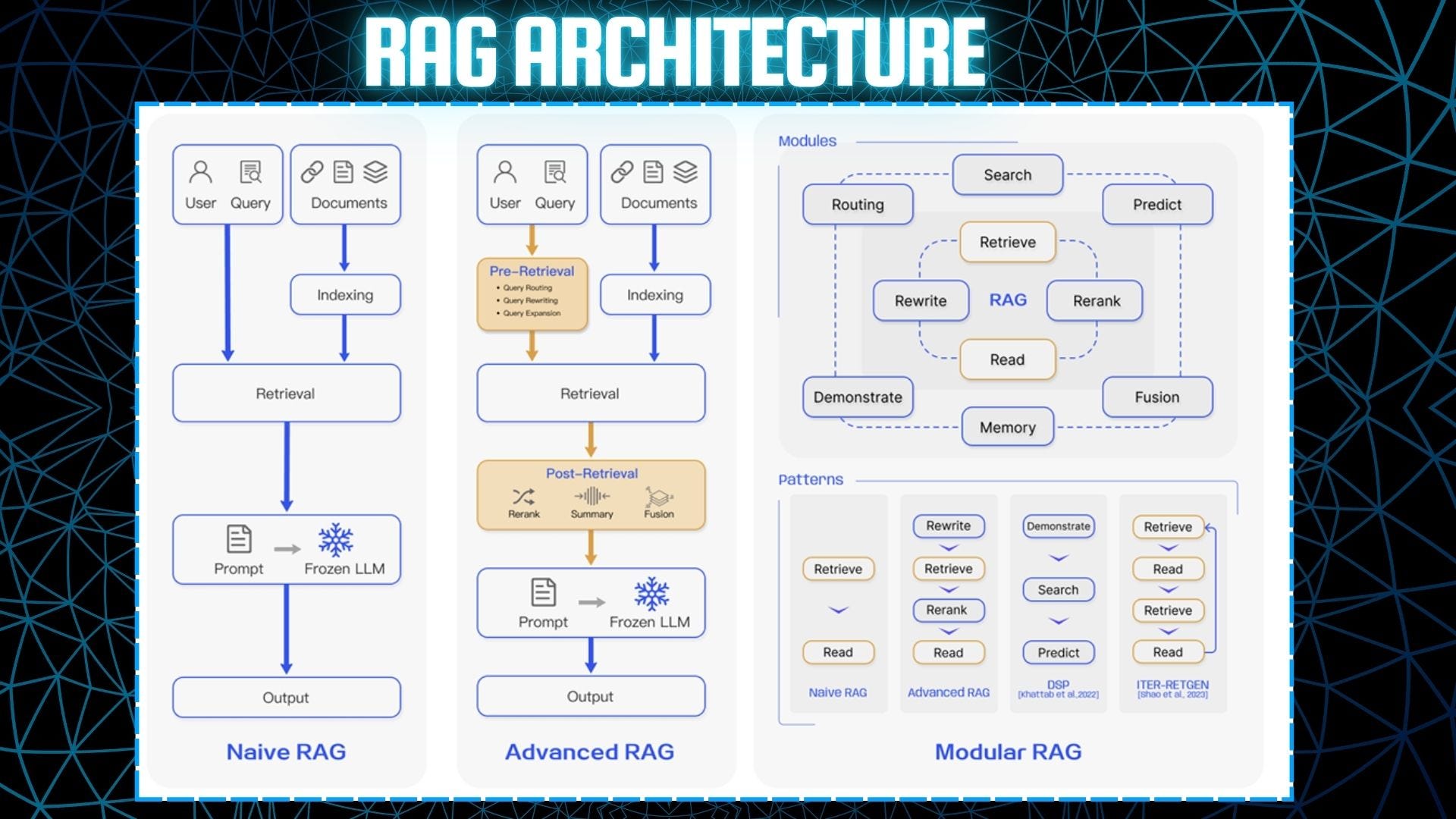
A guide to naive RAG, advanced retrieval strategies, Flare-RAG, GraphRAG, and agentic pipelines, and how to create your architecture.
10 min read
Just now
--
Press enter or click to view image in full size
If you’ve built anything with LLMs in the past two years, you’ve hit the knowledge problem. Your model is smart, but it doesn’t know your company’s internal docs, your customer data, or anything that happened after its training cutoff. That’s where RAG comes in. Retrieval-Augmented Generation. The idea that saved us from fine-tuning every time we needed an LLM to know something new.
This article is about the gap between “I got RAG working” and “RAG actually solves my users’ problems.” We’ll start with the fundamentals, then dig into the advanced techniques that matter when complexity hits.
Basic RAG: How It Actually Works
The foundational RAG approach comes from the paper by Lewis et al. The architecture is deceptively simple: retrieve, augment and then generate.
Press enter or click to view image in full size